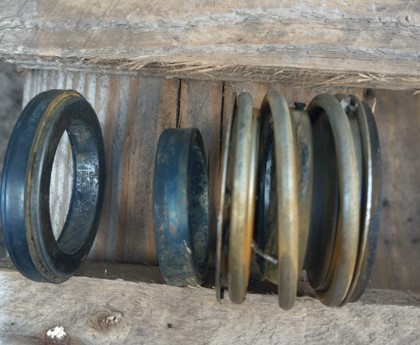
Sticking of the friction pairs is one of the fairly common causes of seal failure (this also includes rubber elements sticking to the shaft). This phenomenon is most often observed after the pump has been idle, even for a relatively short period of about a week.
Why does this happen:
- Water and other substances evaporate, leaving deposits between the smooth surfaces of the friction pairs.
- Salts, chemicals, sugars, etc. dissolved in water crystallize and bond the friction pairs together (silicon carbide, graphite, ceramics).
- Organic or resinous substances thicken, polymerize, and turn into a hard crust.
This can be prevented by taking a few simple steps, which will save you both money and time:
- At least once a week, manually rotate the pump shaft or briefly switch the pump on to rotate the shaft.
- Before shutting down the pump, always flush it with clean water or a neutral solution.
- Automatic anti-sticking protection is provided in many modern control systems – the pump is briefly switched on for 2–3 seconds every 24–48 hours of downtime.
The photograph below clearly shows how, when the pump was started after a long period of downtime, the rubber elements of the R-MG1 mechanical seal were critically damaged at the moment of breaking free from the stationary position, which is a typical example of the friction surface bonding effect.
The engineers at BTS Engineering will be happy to provide consultation and help resolve any issues with your mechanical seal!